
Home page|Computers and laptops|Mobile phones|Other devices|Event viewer|Guides|Links|About
< Go back to the collection list
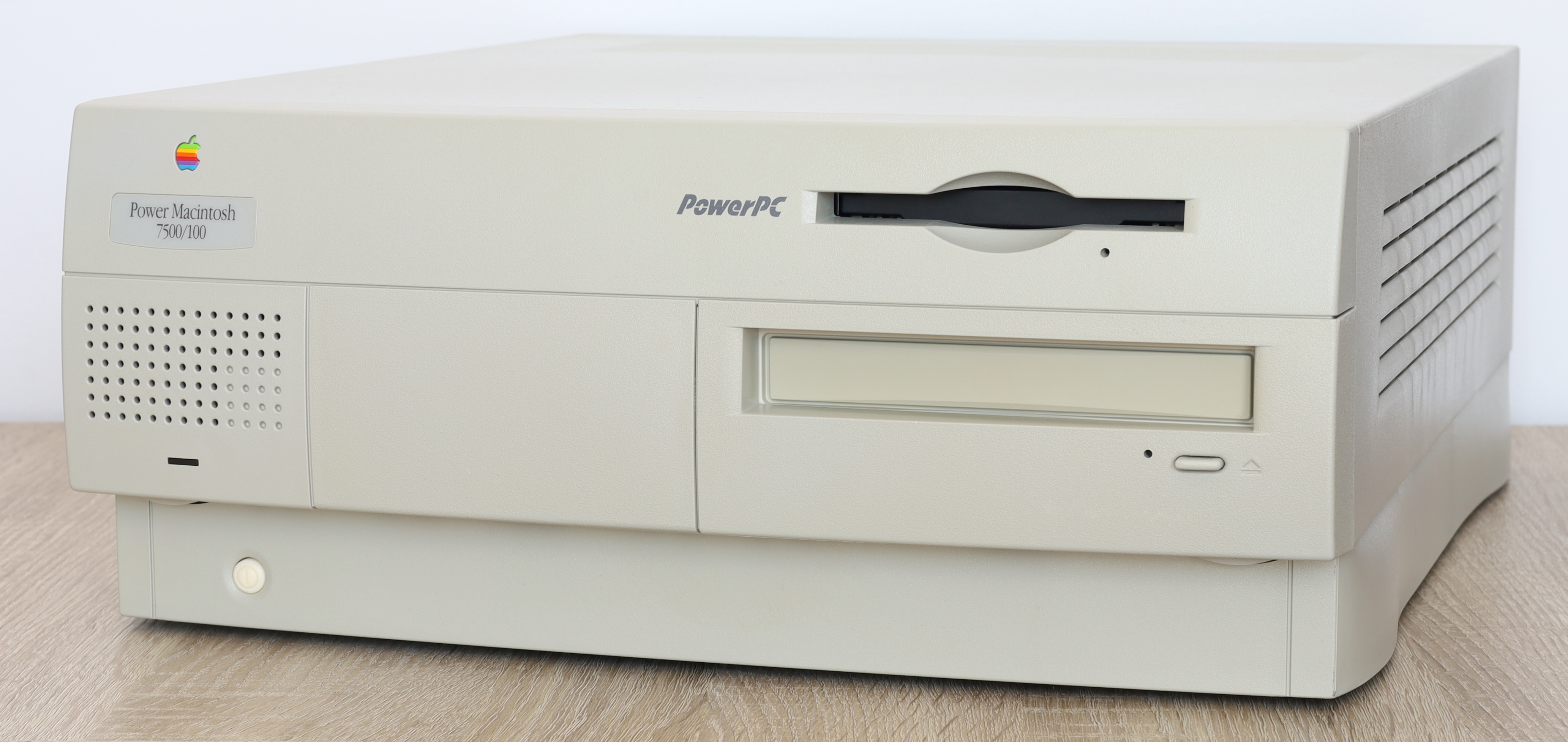
A rather underrated but reliable Macintosh from the 1990s with a rich historical background.
The 1990s were not an easy time for Apple. Right at the start of the decade, it was already clear that Motorola was phasing out the 68k series of processors, which were used in all models, and later on there were further problems linked to poor management, created competition that was poaching customers who would otherwise have bought the most profitable computers, and a constant turnover of CEOs. Moreover, following the launch of Windows 95, Microsoft began to gain customers at an extraordinary rate.
Although Apple had attempted to develop a workstation based on a Motorola RISC processor as early as the late 1980s, it was decided not to pursue its development any further, and the "Jaguar" project was scrapped. In 1991, it was announced that Apple, IBM and Motorola had formed a partnership to develop PowerPC processors, which were intended to be an evolution of IBM's POWER processors, incorporating several enhancements from Motorola's 88k series chips. The engineers at Apple faced a considerable challenge. As it turned out, two projects for the next-generation Macintosh were being developed: "Tesseract", the top-of-the-range model, and "Cognac", which was a more budget-oriented design but focused on ensuring compatibility with existing software for 68k processors.
Of the two design teams, the latter fared much better and stood a chance of completing the work by the deadline set by the board - the 10th anniversary of the launch of the first Macintosh, namely 24 January 1994. The result of their work was the Power Macintosh 6100, which was subsequently expanded to include the 7100 and 8100 models and launched in March 1994.
Even before the first PowerPC-based computers began to gain a foothold in the market, Apple was already working on the second generation of Power Macs. The new range of machines was referred to as "Power Surge", as this new generation was intended to represent a significant leap forward in terms of performance and capabilities. Although, unfortunately, some details are missing, the architecture was named "The New Tesseract" (TNT for short) and, likely using the Power Macintosh 8100 motherboard format, development began on a successor which, like the original namesake project, was intended to be a top-of-the-range computer. A whole family of application-specific integrated circuits (ASICs) was developed, which, together with the PowerPC 604 processor, formed the foundation of the new computers. Interestingly, the ASICs used in the TNT had been under development since early 1993.
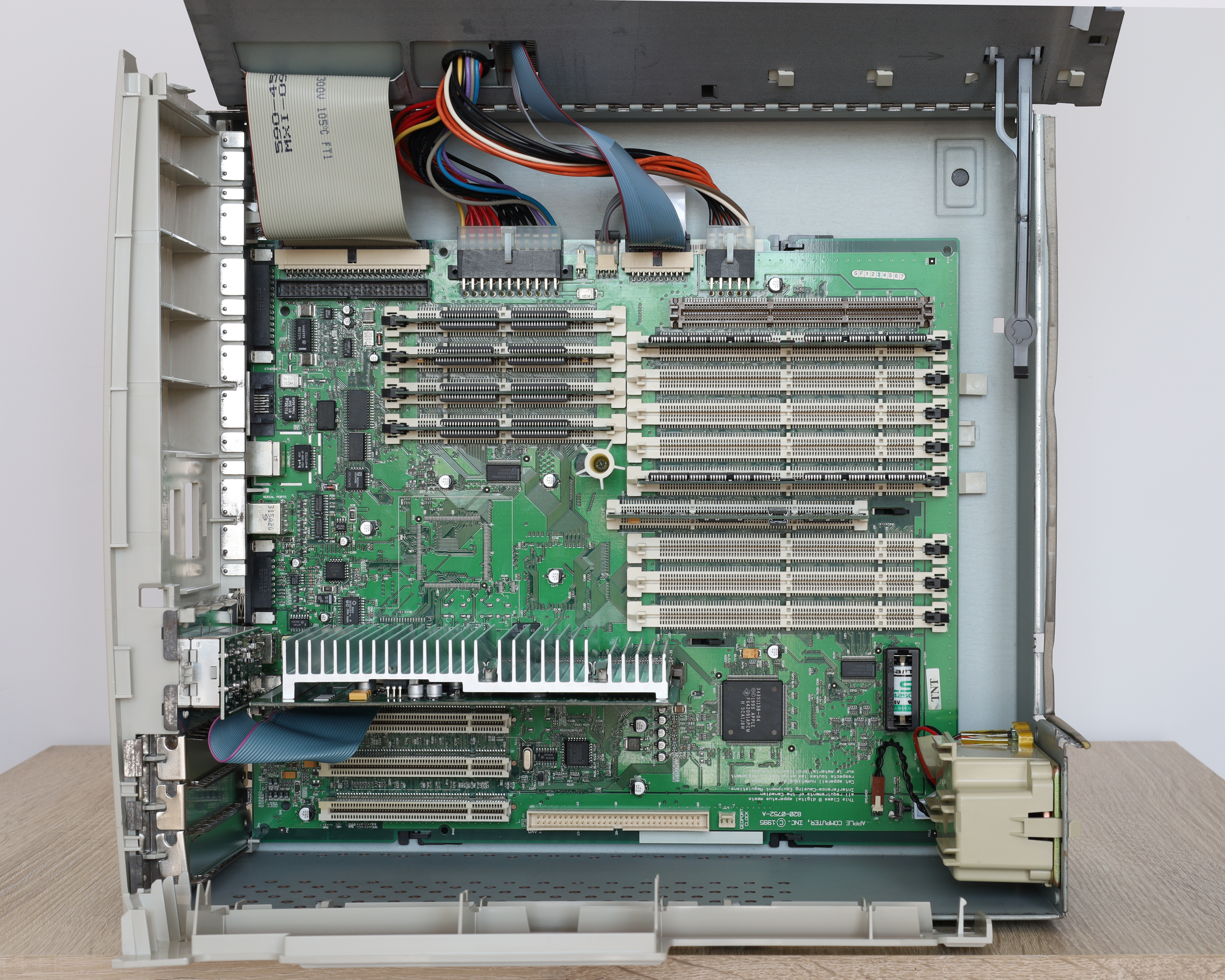
Incidentally, this name remained with the Power Macintosh 7500 right up to the very end, and it is the only model to feature a clear "TNT" marking on the motherboard, which can be seen next to the PRAM battery socket.
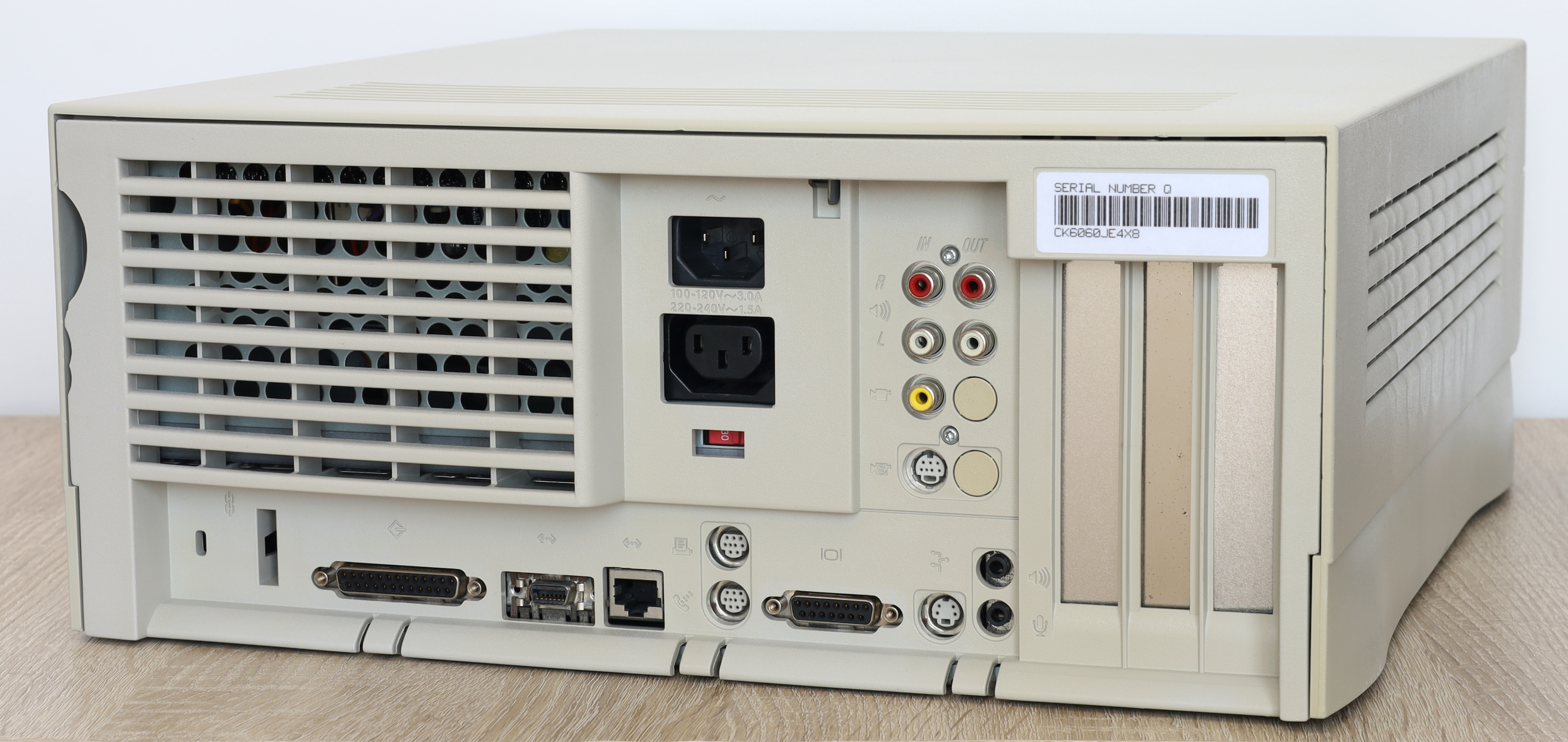
Sometime around the turn of 1993 and 1994, development work was split between two models: the 9500 and the 7500/8500, with priority given to the former as the flagship model. The motherboards for these two models are closely related, sharing practically everything apart from the graphics and video sections. In short: the 7500 was made into a mid-range model by removing the video output capability at the last minute (which is clearly visible, for example, in the ports on the back of the computer, which have been covered with an extra piece of plastic) and fitting an older-generation processor - the 100 MHz PowerPC 601v, just like the 8100. The significantly more expensive 8500 model already featured the newer 604 processor and offered full video processing capabilities to appeal to film editors. The most expensive 9500, meanwhile, had a doubled PCI bus (and consequently two bridges) to offer a staggering six slots for the new standard of expansion cards. The most expensive model had its graphics and video signal processing chips completely removed; these features were instead offered on more sophisticated, high-end PCI cards.
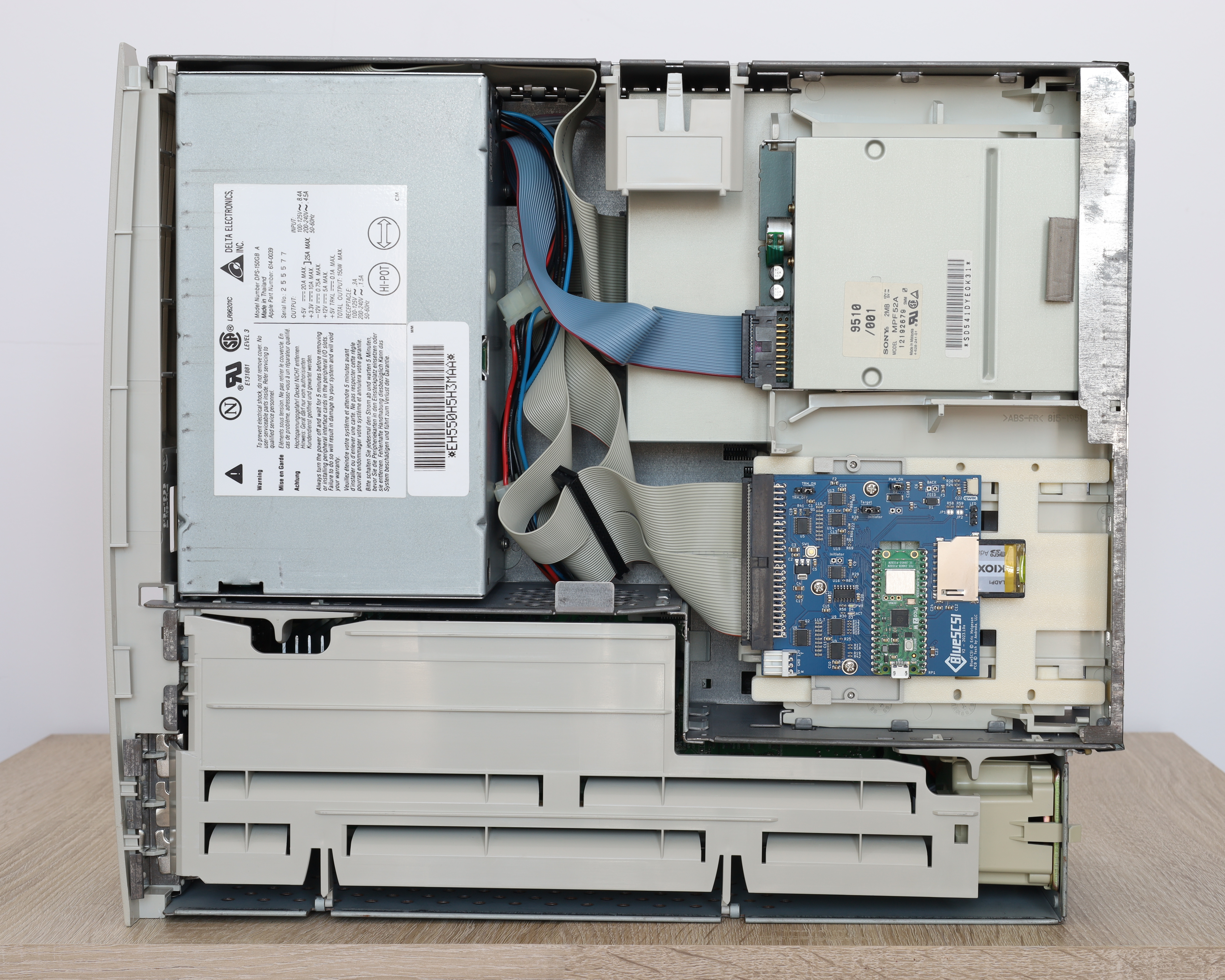
The most interesting thing about all this is that a completely new case, code-named "Outrigger", was designed specifically for the 7500, offering much easier access to the interior than the more expensive models. The 8500 had the old, widely disliked casing reminiscent of the Quadra 800, 840 and its predecessor (the Power Macintosh 8100), whilst the 9500 had a rather... a makeshift, raised version of the 8500's case. So, by buying the cheaper computer, one got more than in the most expensive model - with a more durable case that was easier to maintain or upgrade - in exchange for a factory-spec processor that was less powerful and fewer options for RAM or hard drive capacity. A trade-off. However, all three (the 7500, 8500 and 9500) offered the option to replace the processor, whereas their predecessors (the 7100 and 8100) had theirs permanently soldered in.
In 1996, Apple finally took pity on the Power Macintosh 7500 and began offering it with the newer PowerPC 604 processors, renaming the model to 7600. In practice, it was still the same computer.
The 7500's case was also used for the 7200 model, which, apart from a few minor chips, the ROM, a similar bridge, and the PCI slots themselves, had nothing in common with the TNT-architecture computers. Apple later offered users of the less powerful hardware "upgrade kits", which involved replacing the motherboard with the one from the 7500/7600 and fitting AV sockets to the rear of the case.
And a little tidbit to finish with: the motherboards of the Power Mac 7500/7600 and 8500 are identical, apart from the two chips responsible for the video output, of course, and the computer recognizes its own model via… the LED connector. In the 7500/7600 models, there is a small loop on the power LED plug, which acts as a jumper that tells the system which model the machine is. So one can fit an 8500 motherboard into a 7200-7600 case, install the RCA and S-Video jacks panel from that machine, and end up with a Power Macintosh 7500/7600 with full AV capabilities.
This unit has had its processor replaced from the factory-fitted PowerPC 601v 100 MHz to a 604e 166 MHz from the 7300 model (which was the successor to the 7600, with all AV capabilities removed). In addition, some of the original plastic parts, which had become brittle over the years, have been replaced with new 3D-printed ones.
Specifications:
Gallery
^ Go back to the top ^
Out of the blue, here comes Yazoo
© 2020-2026 Matlaw the Geek
Any rights conserved

